These three acronyms describe two different things: the order in which you ship stock, and the way you value it. Mixing them up is the most common source of confusion.
The three methods
| Method | Meaning | Best for |
|---|---|---|
| FIFO | First In, First Out: oldest received stock is sold first | General goods, non-perishable |
| FEFO | First Expired, First Out: earliest expiry is sold first | Pharma, food, cosmetics, chemicals |
| LIFO | Last In, First Out: newest stock is sold first | Rare; not an accepted costing method for Indian accounting and tax purposes |
📌 In India, LIFO is not a permitted cost formula under Ind AS 2 or ICDS II, which allow FIFO or weighted average. Confirm with your CA before choosing a valuation method.
Picking vs costing
Picking is which physical batch leaves the shelf. Costing is the value assigned to the units sold and the units left. They can differ: a business can pick by FEFO and value by weighted average.
Example
| Batch | Received | Qty | Expiry | Cost/unit (₹) |
|---|---|---|---|---|
| B1 | 1 Jan | 100 | 30 Jun | 50 |
| B2 | 1 Feb | 100 | 31 Mar | 54 |
FIFO would ship B1 first. FEFO ships B2 first, because it expires earlier. Selling 50 units under FEFO takes B2 at ₹54; under FIFO takes B1 at ₹50.
Which should you use?
- Perishable or expiry-dated goods: FEFO, always.
- Everything else: FIFO picking, with weighted average or FIFO costing as your accountant advises.
How NexoraIMS does it
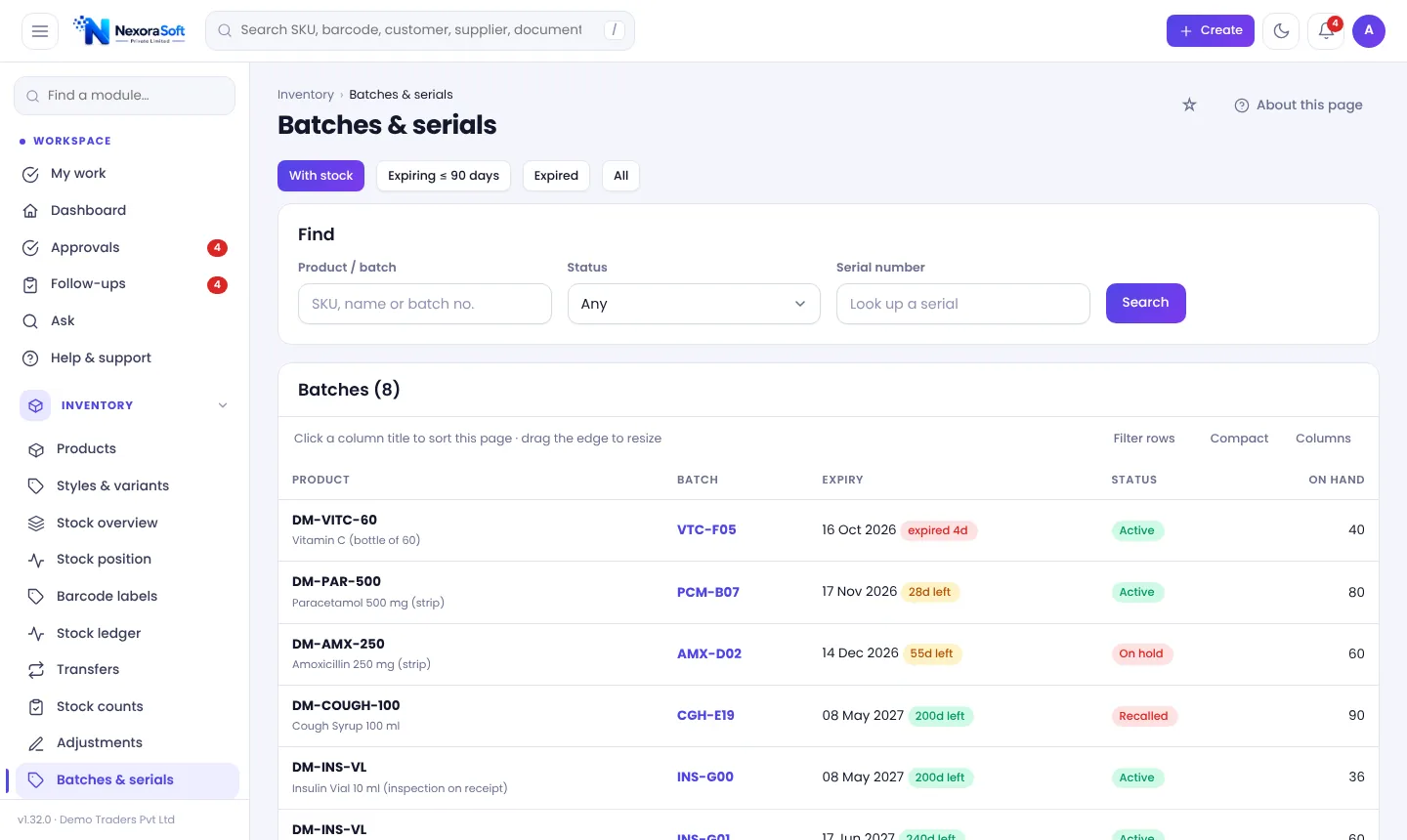
Costing uses weighted average, updated on every receipt. For batch-tracked products, a sale with no batch chosen takes the batch that expires first (FEFO); recalled or held batches are never picked, and expired goods are refused on receipt. See batch and expiry tracking software.
Related guides: Inventory Management Software in India (complete guide)
Stock Management SoftwareBatch & Expiry Tracking SoftwareInventory Software for Pharma DistributorsWhat Is Inventory Management Software?Batch and Expiry Tracking GuideDead Stock and Slow-Moving Inventory
See NexoraIMS in Action
Book a free live demo and see stock, purchasing, GST billing and reports run on your own products.
Book a Free Demo +91 98115 51004