Food cost percentage tells you how much of each rupee of sales goes into ingredients. Recipe costing is how you know it dish by dish.
The formula
Food cost % = cost of ingredients ÷ selling price × 100. If a dish costs ₹100 to make and sells at ₹350, the food cost is about 28.6%.
Costing a recipe
- List every ingredient and quantity per plate
- Use the current purchase rate per unit
- Add yield loss for trimming and cooking
- Add garnish and packing if used
- Sum for the plate cost
Typical targets
Targets vary by type of restaurant, so set your own after checking real numbers rather than copying a figure.
Actual vs expected
Recipe-based stock deduction tells you what should have been used. A count tells you what was used. The gap is wastage, portion errors or leakage.
In NexoraRMS-POS
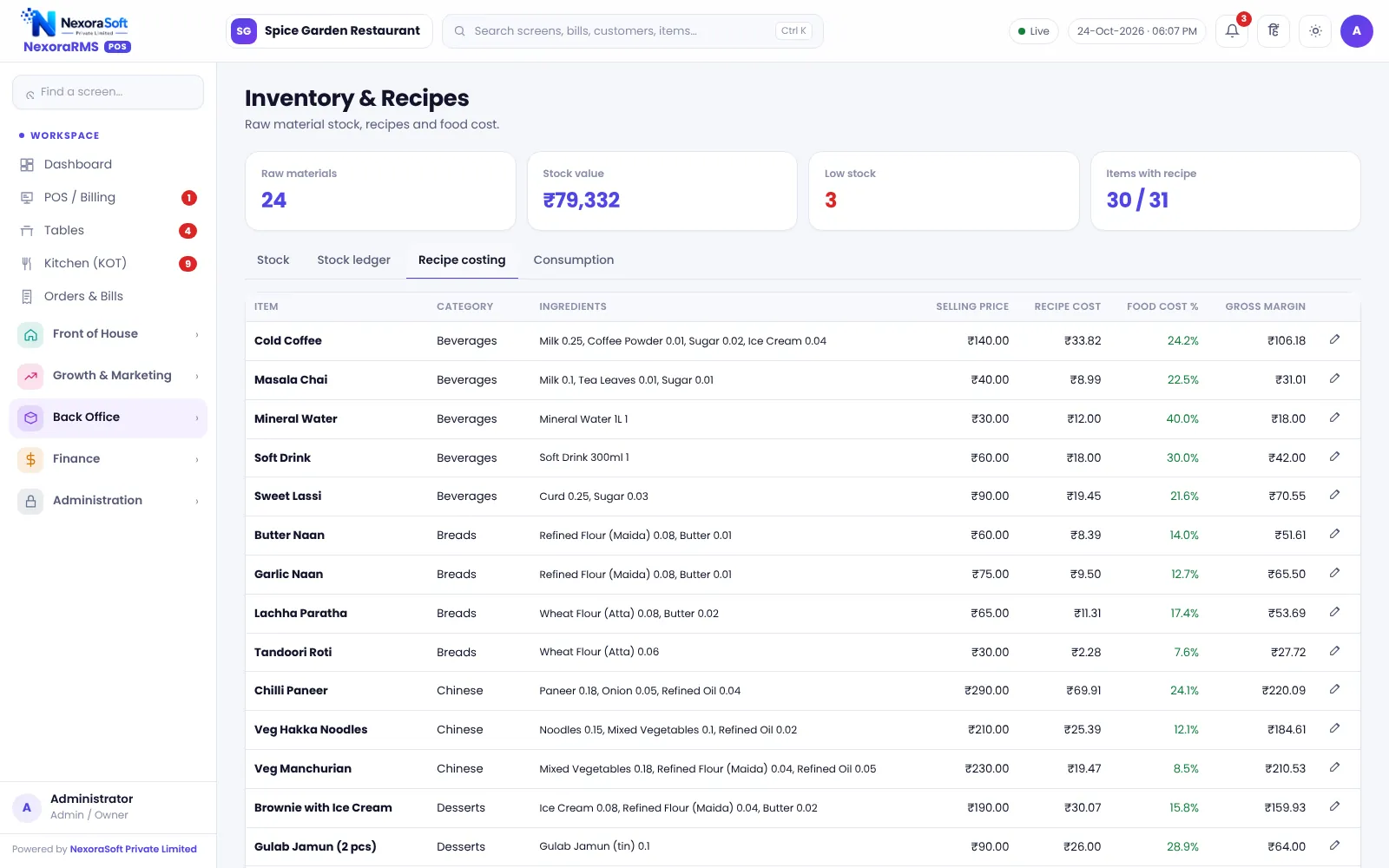
Recipes link dishes to raw materials. Selling a dish deducts the ingredients, the recipe screen shows cost, food cost % and margin, and the stock variance report shows gaps. See inventory and recipe costing.
Review weekly
- Update purchase rates
- Reprice dishes with high food cost
- Check variance on top materials
- Train cooks on portion size
A worked example
| Ingredient | Qty | Rate | Cost |
|---|---|---|---|
| Paneer | 80 g | ₹360/kg | ₹28.80 |
| Tomato and onion gravy | 120 g | ₹50/kg | ₹6.00 |
| Cream and butter | 20 g | ₹400/kg | ₹8.00 |
| Spices and oil | ₹5.00 | ||
| Total plate cost | ₹47.80 |
At a selling price of ₹280, food cost is about 17%. The numbers here are illustrations, not benchmarks; use your own rates.
Related guides: Restaurant POS Software in India (complete guide)
Restaurant Inventory & Recipe Costing SoftwareRestaurant Purchase & Vendor SoftwareRestaurant Inventory and Wastage ControlMenu Engineering Guide
See NexoraRMS-POS in Action
Book a free live demo and see billing, KOT, tables, QR ordering and reports run on your own menu.
Book a Free Demo +91 98115 51004