Before you pay a supplier, three documents should agree: what you ordered, what you received and what they billed. This is three-way matching, and it prevents overpaying.
The three documents
| Document | Says | Created by |
|---|---|---|
| Purchase order | What we agreed to buy and at what rate | You |
| Goods receipt note (GRN) | What actually arrived, and what was rejected | Your store |
| Supplier invoice | What the supplier is charging | Supplier |
What is compared
- Quantity: invoice quantity should not exceed received (accepted) quantity
- Rate: invoice rate should match the PO or contract rate
- Tax and charges: GST and freight as agreed
- Duplicates: the same supplier invoice number should not be booked twice
Example
| Item | PO | GRN (accepted) | Invoice | Result |
|---|---|---|---|---|
| Item A | 100 @ ₹50 | 95 | 100 @ ₹50 | Mismatch: invoice 5 units more than received |
| Item B | 40 @ ₹80 | 40 | 40 @ ₹85 | Mismatch: rate above PO |
Tolerances
Many firms accept small differences (for example 1-2%) automatically and escalate the rest. Decide what you accept before software enforces it.
How NexoraIMS helps
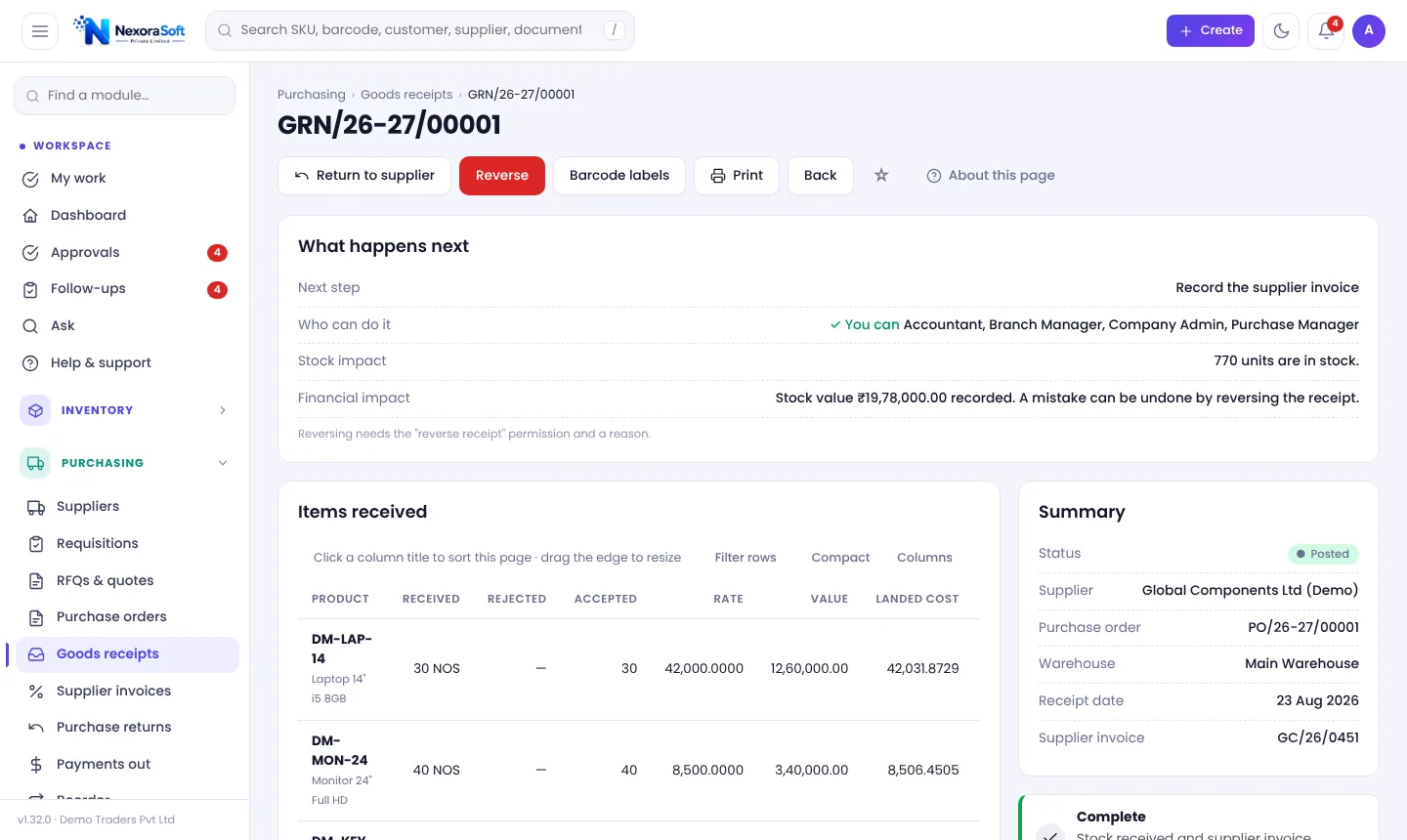
Supplier invoices are checked for duplicates and matched against the order and the receipt, and contract rates can warn or block a PO above the agreed rate. Rejected units on the GRN reduce the accepted quantity. See purchase order management software.
Related guides: Inventory Management Software in India (complete guide)
Stock Management SoftwarePurchase Order Management SoftwareSupplier Performance SoftwareWhat Is Inventory Management Software?Multi-Warehouse Inventory ManagementInventory Shrinkage and Stock Audit
See NexoraIMS in Action
Book a free live demo and see stock, purchasing, GST billing and reports run on your own products.
Book a Free Demo +91 98115 51004